
Rapid Radios Popular
The ability to transmit music and voices over long distances was a key reason for radio’s popularity. It was a new way for people to connect with each other. Despite patent bickering and world war, the public was eager to use and enjoy this new technology. Rapid radios claim to work in areas with no cellular coverage and have no monthly fees. But how do they work? Rapid radios are used by emergency response teams, such as firefighters and police officers, to keep in touch with each other. They are also great for businesses with large retail spaces or office campuses because they allow employees to communicate quickly and efficiently. They are also useful in disasters because they don’t rely on cell towers to work, unlike cellular phones.
This radio company claims their products are “unlike the majority of PTT walkie talkies that run on cellular networks” and that they will work even if a cellular network is bogged down. That’s a complete lie and it’s unethical to advertise such an untrue statement. Their product actually uses China roaming sims and they don’t have carrier certification. They are also not FCC certified. They also have no monthly fees or contracts, so you can use them anywhere in the US.
In case of an emergency, rapid radios can help in communicating with people who are not near each other. They are also useful for hikers and adventure lovers, who need to stay in touch with their group as they explore remote areas. They can send quick messages and updates, helping to ensure safety. These radios can also be used at work sites to improve communication between staff members. For example, warehouse managers can instantly share inventory information with other team members. This helps to improve efficiency and reduce downtime.
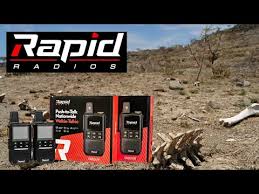
Why Are Rapid Radios Popular?
These radios are advertised as working even when the cell network is down, but they rely on cellular networks to function. They don’t support all the LTE bands that a modern cell phone supports, and they require an annual fee for continued service. This is $50 per radio, or $200 per set, which is quite expensive for something that isn’t even a true PTT walkie talkie.
Compared to cell phones, which can get bogged down in an emergency, rapid radios allow people to communicate instantly. This is important because in emergencies, lives can be saved if there is clear communication. Moreover, rapid radios are also useful in business settings, such as in warehouses or large retail spaces. They can help managers quickly share tasks with their teams and ensure that everyone is on the same page. They can even be used to relay messages to staff working in remote locations, such as forest or mines.
For example, one company called Rapid Radios offers push-to-talk nationwide walkie-talkies that have no monthly fees. They include a SIM card with one year of service and offer free shipping anywhere in the USA. After the first year, the service can be renewed for $50 per radio each year. For more information, visit their website. They are also an FCC and carrier-certified manufacturer. This means they comply with all regulations and guidelines regarding the use of two-way radios.
Rapid radios are used by many groups, including emergency response teams. They are an essential tool in any disaster situation because they help to save lives by facilitating communication between members of the rescue team. They are also useful in business settings and can improve efficiency by allowing managers to send messages to employees without delay.
Rapid Radios offers push-to-talk nationwide walkie-talkies that offer a lifetime of free service and unlimited range. They come in a set and are easy to use. They are designed for families, businesses, and emergency preparedness, and they offer free shipping and a money-back guarantee. They are a 100% American-owned business with a commitment to customer satisfaction. Their products are reliable and will continue to work even if the cellular network fails during a disaster. However, they do charge a yearly fee of $50 per radio to continue the service. Their ad claims that they don’t have monthly fees, but they are actually charging an annual fee of $50 per radio.