
lifespan of a flexible PCB fabricated product
A high-quality rigid flex PCB is an investment that delivers long-term benefits. It reduces assembly time, testing time and wire routing errors. It also improves signal integrity and increases the reliability of circuitry. In contrast, cheaper alternatives are a bargain in the short term, but they may suffer from thermal issues, electrical performance issues, flexibility and mechanical failures over time. The lifespan of a flexible PCB fabricated product is directly related to the quality of the materials used and the fabrication process.
PCBs must be able to withstand a range of conditions, including moisture and heat. Using a flexible PCB allows designers to create complex products that are lightweight and compact, while still incorporating powerful features such as touch-screens and sensors. Flexible PCBs can also reduce production costs and allow manufacturers to use environmentally friendly materials for manufacturing.
A flexible pcb fabrication is more durable than a traditional rigid board, because it can withstand a wide range of environmental conditions. This durability makes it a great choice for many applications, including medical devices. Most medical devices need to be powerful, but they must also be small and lightweight, which can be difficult to achieve without the help of a flex circuit board.
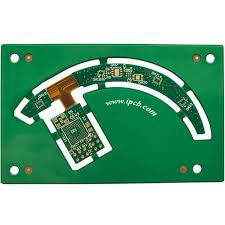
What is the lifespan of a flexible PCB fabricated product?
Another advantage of a flexible PCB is that it can be made with different types of conductors. Typically, these conductors are made of copper, but flexible circuit boards can also be made with aluminum, electrodeposited (ED) copper or rolled annealed (RA) copper. This versatility makes a flexible PCB ideal for the Internet of Things (IoT) ecosystem, where circuits must be able to work in different environments.
When designing a flexible PCB, it is important to consider the overall structure and layout of the board. For example, it is a good idea to place a ground plane on both sides of the traces, as this will prevent shorts. Also, the design of a flex PCB should take into account the bending radius. A large bend radius is preferable to sharp angles, as it will cause fewer stress points and increase the lifespan of the circuit. It is also a good idea to use curved traces rather than straight ones, as this will cause less stress and damage.
Proper storage is essential for extending the life of a flexible PCB. This includes storing them in an environment that is free from humidity, temperature fluctuations and direct sunlight. These factors can accelerate the degradation of materials and lead to premature failures. Additionally, regular inspections and testing can help ensure that the circuits perform optimally throughout their life cycle.
Understanding the factors that influence the lifespan of a flexible PCB can help manufacturers, designers and users maximize their efficiency and cost-effectiveness. By choosing the right materials, following proper manufacturing techniques, storing PCBs in a controlled environment and taking into account expected operating conditions, flexible PCBs can provide years of reliable performance. Additionally, by performing regular inspections and tests, potential problems can be detected before they become a serious problem.