
purpose of a circuit board
A circuit board, or printed circuit board (PCB), serves as the foundation of most electronic devices. Its primary purpose is to mechanically support and electrically connect various components, enabling the device to function as designed. Circuit boards are an essential part of modern electronics, allowing for the miniaturization and efficient performance of complex systems. They play a critical role in everything from smartphones and computers to medical devices and industrial machinery.
One of the primary functions of a circuit board is to organize and support electronic components. Components such as resistors, capacitors, transistors, and integrated circuits are mounted onto the board, and the PCB provides a rigid structure that holds these parts in place. Without a PCB, components would have to be connected manually, leading to a tangled, unreliable system. The well-structured layout of a circuit board simplifies the assembly process, ensuring each component is positioned accurately. This organization is crucial for devices to function properly, as even minor misplacement could disrupt the flow of electricity or lead to malfunctions.
In addition to organizing components, a circuit board serves the critical purpose of facilitating electrical connections between these components. The conductive pathways, or traces, etched into the PCB form electrical circuits that allow different parts of the device to communicate with one another. These copper traces replace traditional point-to-point wiring, streamlining the manufacturing process and reducing the risk of human error. By embedding these pathways into the board, circuit board ensure reliable, consistent connections, which is especially important in devices requiring precision and speed, such as computers and medical equipment.
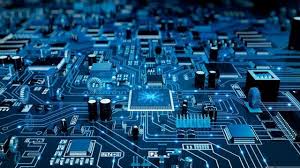
What is the purpose of a circuit board?
Another significant purpose of a circuit board is miniaturization. In the early days of electronics, point-to-point wiring made devices bulky and difficult to scale. Circuit boards revolutionized this by enabling the creation of compact, lightweight, and portable devices. Modern PCBs can be multilayered, allowing for more complex circuits to be fitted into smaller spaces. This capability is what allows today’s electronic devices, like smartphones and laptops, to be so small yet incredibly powerful. Without the miniaturization made possible by circuit boards, the technological advances we enjoy today would not have been achievable.
Circuit boards also contribute to durability and reliability. By organizing and securing components in place, PCBs protect them from mechanical stress and vibration, which is especially important in portable or industrial applications. The solder mask and protective coatings applied to the board further insulate the electrical pathways, preventing short circuits and damage from environmental factors like moisture or dust. Additionally, the standardization of circuit board manufacturing ensures that each device produced is consistent in quality and performance. This reliability is critical in industries such as aerospace, telecommunications, and healthcare, where failure of electronic systems can have severe consequences.
Beyond these physical and functional roles, circuit boards play a key role in the maintenance and repair of electronic devices. Since the components are clearly laid out and connected via printed traces, troubleshooting and diagnosing problems becomes easier. Repair technicians can trace circuits and identify faulty components quickly, making repairs faster and more cost-effective. This is especially important in high-tech or mission-critical applications, where downtime can be costly.
Finally, circuit boards also contribute to the scalability and mass production of electronic devices. Because the design of a PCB can be standardized and replicated, manufacturers can produce large quantities of identical boards quickly and efficiently. This scalability has been a driving force behind the mass adoption of consumer electronics, as well as the development of more complex devices in industries like automotive and aerospace.


